If you have ever run an AI model and thought, “Why is this so slow, so expensive, and eating up my GPU like crazy?” then you already understand the exact problem Pruna AI was built to solve.
I have been following AI optimisation tools for a while now, and Pruna AI stands out. Not because of hype, but because it solves a real, painful, and expensive problem that developers, ML engineers, and AI product teams face every single day. It is the kind of tool that pays for itself the moment you start using it.
In this guide, I will walk you through everything you need to know. What Pruna AI actually does, who built it, how to use the Pruna AI playground, what P-Video is, how it connects to Hugging Face, and whether it is worth your time. I will also cover the open-source framework, the funding story, the founder team, and real-world results developers are seeing.
Let us get into it.
What Is Pruna AI?
Think of Pruna AI as the mechanic who takes your AI model, which is bloated, slow, and guzzling compute costs, and tunes it into a lean, fast, and efficient machine without wrecking the quality.
At its core, according to their official documentation at docs.pruna.ai, Pruna AI is a model laboratory and inference provider. They create their own performance models, research and optimise models in-house, and ship them as serverless endpoints. They also provide an open-source optimisation framework to make your models smaller, faster, cheaper, and greener.
That is actually three businesses in one: a model laboratory, an inference provider, and a developer tools company. That combination is rare, and it is a big part of why Pruna AI is gaining serious traction.
Here is a real-world way to think about it. You build a powerful language model. It works great. But every time someone calls it, it takes three seconds, costs $0.05 per call, and requires a beefy A100 GPU. At scale, that is a financial disaster. Pruna AI steps in, compresses the model using a combination of proven techniques, and now it runs in under one second at a fraction of the cost on a much smaller GPU. That is not magic. That is engineering.
Founded in 2023, Pruna AI has grown from an academic research project into a funded startup with paying enterprise customers, 10,000-plus compressed models on Hugging Face, and a growing suite of generative AI products.
Who Founded Pruna AI? The Team Behind the Technology
One of the first things I look at with any AI startup is the founding team. Credentials matter here because AI optimisation is a deeply technical domain. Pruna AI’s founding team is genuinely impressive.
The four co-founders are CEO Rayan Nait Mazi, Chief Scientist and President Bertrand Charpentier, CTO John Rachwan, and Chief Strategy Officer Stephan Guennemann.
Rayan Nait Mazi, the CEO, holds an MEng from Centrale Paris and an MPhil from HKUST, and is a third-time founder. That entrepreneurial track record matters because building a great research tool is one thing, and turning it into a scalable business is another.
Bertrand Charpentier is the Chief Scientist with a PhD in machine learning from the Technical University of Munich (TUM) and research experience at Twitter, Stanford, and Telecom Paris. The idea for Pruna AI emerged from his doctoral research into efficient AI methods as evolving deep learning challenges pushed computational boundaries further and further.
John Rachwan is the CTO and holds an ML MSc from TUM, graduating summa cum laude. He was formerly an AI Team Lead at Design AI, which was later acquired by Helsing, and he won the EDA Defence Innovation Prize in 2021. In an interview with TechCrunch, Rachwan described the framework as doing for AI efficiency what Hugging Face did for transformers, standardising how developers save, load, and evaluate compressed models.
Stephan Guennemann is the Chief Strategy Officer and a Professor of Machine Learning at TUM, leading a research group of over 30 PhD students. His lab has partnerships with Google, Siemens, and BMW, which speaks to the depth of applied research experience he brings.
Together, the founding team brings over 30 years of combined experience and a portfolio of 270-plus published research papers, according to information from aipressroom.com. This is not a team chasing a trend. They built this company because they lived the problem firsthand in their own research.
Where Is Pruna AI Based?
Pruna AI is headquartered in Munich, Germany, with a second research hub in Paris, France. Having dual hubs in Europe’s two largest AI cities gives the team access to deep talent pools and positions the company at the center of Europe’s growing AI ecosystem.
The company is also a member of the Coalition for Sustainable AI and co-authored research titled “Key challenges for the environmental performance of AI,” which shows that their sustainability focus is not just marketing language. It is baked into their academic and corporate identity.
Pruna AI Funding: The Investment Story
Pruna AI secured a $6.5 million seed funding round in November 2024, led by EQT Ventures. Other investors include Daphni, Motier Ventures, and Kima Ventures, along with prominent angel investors such as Roxanne Varza, Hervé Nivon, and Olivier Pomel.
The funding was confirmed by reporting from TechCrunch in March 2025, when the company also announced the open-sourcing of its optimisation framework. According to the funding announcement covered by aipressroom.com, the capital is being directed towards expanding the technical team, accelerating product development, and driving global adoption of their optimisation solution.
The Daphni connection is worth noting separately. The successful close of Daphni’s 260-million-euro deeptech fund, which highlights Pruna AI as a key portfolio company, validates their long-term potential in science-driven AI innovation.
In terms of revenue, data from getlatka.com shows Pruna AI reached $2.8 million in revenue in 2025 with a team of approximately 25 people at the time. For a seed-stage company founded in 2023, that is a strong early signal. There was also an M&A offer reported in April 2025, which, while unconfirmed in terms of value, suggests that larger players are already paying attention.
How Does Pruna AI Actually Work?
This is where things get technically interesting, and also where Pruna AI genuinely differentiates itself from everything else in the space.
Most developers know one or two ways to make an AI model faster. Quantisation, for example, or pruning. These methods exist in the open-source world. The problem is that they exist in isolation. You find a quantisation library here, a caching trick there, a distillation tutorial somewhere else. None of it is standardised, combined, or evaluated together.
That is the gap Pruna fills. As CTO John Rachwan explained to TechCrunch directly, “you cannot find a tool that aggregates all of them, makes them all easy to use and combine together, and this is the big value that Pruna is bringing right now.”
Pruna AI’s engineering approach brings pruning, quantisation, distillation, and caching into a common framework, allowing developers to combine techniques rather than integrate each one separately. Evaluation agents then assess efficiency and output quality after compression, so you are not compressing blindly. You get a clear measurement of what you gained and what, if anything, you lost.
Let me break down each of the four core methods in plain English.
Pruning removes parts of the model that are not contributing meaningfully to output quality. Imagine trimming dead weight from a team. The team gets faster without losing capability.
Quantisation reduces the numerical precision of the model’s weights, for example, moving from 32-bit to 8-bit floating point numbers. The model gets smaller and faster with very little perceptible quality loss in most cases.
Distillation trains a smaller “student” model to mimic the behaviour of a larger “teacher” model. You capture the same knowledge in a fraction of the space. The student takes the exam using everything the teacher taught it.
Caching stores intermediate computations so the model does not repeat the same calculations on similar inputs. This cuts latency significantly for use cases with repeated or similar queries.
Beyond these four core methods, Pruna’s open-source framework also supports over 50 state-of-the-art compression algorithms, including recovery techniques and compilation optimisations, and all of them can be combined together. That is a level of flexibility that no other open-source tool currently matches.
A concrete result: as confirmed by TechCrunch reporting from March 2025, Pruna AI successfully reduced the size of a Llama model by eight times with almost no loss in accuracy. For perspective, an eight-times reduction means a model that needed an A100 GPU might now run efficiently on a much smaller T4 or even CPU-based inference.
According to information from aipressroom.com, Pruna AI’s platform has been shown to cut carbon emissions by up to 91 percent through model compression. That number is significant. AI inference, not training, represents up to 90 percent of the total compute costs of AI models, as noted in Pruna’s own open-source announcement. Cutting inference costs does not just save money. It changes the economics of the entire AI industry.
The Environmental Case: Why AI Compression Matters Beyond Speed
This is a point that does not get talked about enough, and it is something Pruna AI is building into its corporate identity in a meaningful way.
The coalition for sustainable AI, of which Pruna is a member, documents how AI energy consumption is becoming a genuine societal and environmental concern. The Pruna team has described the problem this way in published materials: if everyone in Germany generated just five pages with an AI model like ChatGPT every day, it would require two nuclear power plants running continuously to supply the energy.
That is the scale of the problem. Model compression is not just a developer convenience. For the AI industry to remain scalable and affordable at a global level, the models themselves need to become dramatically more efficient. Pruna AI is building the infrastructure to make that happen, and doing it open-source so the entire ecosystem benefits.
Pruna AI on Hugging Face: 10,000-Plus Compressed Models
If you are an ML developer, you have almost certainly spent time on Hugging Face. Pruna AI has made it a core part of how they reach developers.
By March 2025, Pruna AI had published more than 10,000 compressed AI models on Hugging Face, making them the top organisation on the platform by number of models published. That is not a small milestone. It means that if you are already working in the Hugging Face ecosystem, there is a very good chance Pruna has already optimised a version of the model you are looking for.
Their Hugging Face library, accessible at huggingface.co/PrunaAI, includes compressed versions of models across image generation, video, language, and audio. Examples include faster Stable Diffusion variants, compressed Llama models, optimised Mistral models, smashed Whisper transcription models, and more. Every model is labelled with its compression configuration so you know exactly what trade-offs were made.
The open-source community traction is real. Their GitHub repository at github.com/PrunaAI has accumulated over 1,300 stars for the core pruna package, and their Hugging Face models collectively reached 1.3 million downloads as reported by startup tracking platform startupintros.com.
The Open-Source Framework: Bring Pruna Into Your Own Stack
In March 2025, Pruna AI open-sourced its flagship optimisation package, which was a major moment for the developer community. As CTO John Rachwan described it in TechCrunch, the goal was to do for AI efficiency methods what Hugging Face did for transformers: standardise how developers call, save, load, and evaluate compressed models.
The open-source version is free and covers core compression techniques. Developers can plug it directly into existing workflows without rewriting their pipeline. If you are working in Python and already using Hugging Face models, integration is straightforward.
The Pruna Pro version adds advanced compression algorithms and the compression agent, which is the most exciting enterprise feature in the roadmap. The agent works like this: you give it your model, specify a performance requirement such as “increase speed without dropping accuracy by more than two percent,” and the agent finds the optimal combination of compression methods automatically. You do not have to manually tune anything. As Rachwan told TechCrunch, “the agent will just do its magic.”
Pruna Pro charges by the hour, comparable in structure to renting GPU time on AWS or GCP. The economics work out because the savings on inference costs from the compressed model typically far outweigh the hourly cost of running the optimisation.
You can find everything at github.com/PrunaAI and docs.pruna.ai.
Pruna AI Products: P-Image and P-Video
Alongside the compression framework and Hugging Face library, Pruna AI has built a growing suite of hosted generative AI products under the P-Image and P-Video brands. These are not just demos. They are production-ready APIs with competitive pricing that developers and creative teams are already building on.
P-Image: Fast, Affordable Image Generation and Editing
The P-Image family covers the full image workflow from generation to editing to upscaling to virtual try-on. The lineup includes P-Image for text-to-image generation, P-Image-Ideogram for typography-focused generation, P-Image-Edit for AI-powered image editing, P-Image-Upscale for resolution enhancement, and P-Image-Try-On for virtual garment fitting.
Pricing from the official Pruna AI documentation: P-Image costs $0.005 per run at 0.6 seconds of generation time. P-Image-Edit costs $0.01 per run at 0.9 seconds. P-Image-Upscale costs $0.005 per run and handles images up to 128 megapixels. P-Image-Try-On costs $0.015 per run at 2 seconds.
That Try-On figure is worth sitting with. For e-commerce brands, producing virtual try-on at $0.015 per image removes a significant barrier that used to require either expensive studio photography or enterprise-priced software. A small online store running 10,000 try-on previews per month spends $150 on the API. That is a rounding error compared to traditional sample production costs.
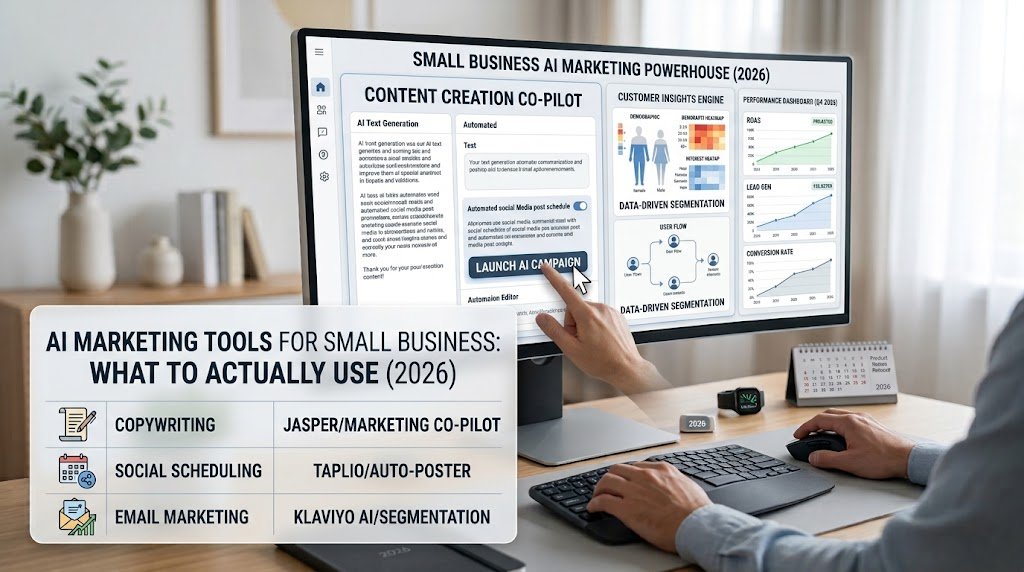
Pruna recently also launched Fully Managed LoRAs, which allows teams to create personalised AI image generation pipelines fine-tuned to their brand, product style, or character consistency, without managing the infrastructure themselves. For any team doing repeated AI image generation with specific visual identities, this is a meaningful capability. If you are exploring AI image and video tools for marketing, our guide on AI marketing tools for small businesses at smartaigist.com/ai-marketing-tools-for-small-business/ is worth reading alongside this one.
Pruna AI P-Video: The Flagship Video Generation Product
P-Video is the product generating the most excitement right now, and after looking at it closely, I understand why.
P-Video transforms text prompts into 720p video clips in approximately 10 seconds of wall time, according to testing documented by Segmind. At its base pricing of $0.005 per second of output video in draft mode, it is one of the most affordable text-to-video APIs currently available anywhere.
The official Pruna AI documentation describes P-Video as a performance video generation model delivering state-of-the-art AI video in seconds, designed for professional results with a rare combination of speed, affordability, visual quality, draft mode for rapid iteration, and high control with text prompts and image references.
Here is the full capability set that makes P-Video worth considering for production use:
It accepts text-to-video, image-to-video, and audio-to-video inputs, all through a single API endpoint. It supports seven aspect ratios including 16:9 for cinema, 9:16 for mobile and vertical social, 4:3 for classic formats, and 1:1 for square social content. Duration is controllable from 3 to 15 seconds per clip. Output is available in 720p or 1080p, at 24 or 48 frames per second. It includes built-in audio generation with dialogue support and native sound design. You can also import custom audio tracks and sync them to generated visuals. A seed parameter allows reproducible outputs, which is invaluable when iterating on camera movement or lighting. Prompt upsampling automatically enhances your input text for better results while preserving full user control.
The draft mode feature deserves special attention because it changes how creative workflows actually work. Draft mode generates low-fidelity but compositionally accurate previews in approximately 2.5 seconds for 720p. Think of it as a quick thumbnail sketch before committing to the full render. You can see whether your prompt delivers the right result in motion, framing, and subject placement before spending time or budget on a full-quality generation. Independent testing documented on Replicate’s platform confirmed this workflow benefit in real-world use.
The pricing structure for P-Video (first version) from official Pruna documentation: 720p with draft mode OFF costs $0.02 per second of output video, and with draft mode ON costs $0.005 per second. 1080p with draft mode OFF costs $0.04 per second, and with draft mode ON costs $0.01 per second.
For practical context: a 5-second 720p full-quality video costs $0.10. A 5-second 720p draft preview costs $0.025. A marketing team generating 500 variants of a campaign video at draft quality spends $12.50 before selecting the best for full-quality renders. That is a workflow that would have cost thousands of dollars in traditional production.
Segmind testing also documented that generating 12 video variants (three products across four formats each) costs $0.06, compared to a traditional 30-second product video shoot that costs between $2,000 and $5,000.
P-Video-2 and P-Video-2-Pro: The Latest Generation
Pruna has since released updated versions of P-Video that deliver even higher quality and more options. P-Video-2 generates videos from text, images, or audio in 720p or 1080p, with a Draft mode for fast previews and a Standard mode for final-quality output. P-Video-2 Draft pricing starts at $0.015 per second, while P-Video-2 Standard starts at $0.025 per second.
P-Video-2-Pro goes further. Built on MiniMax H3 architecture, it delivers pro video generation from text and images with native audio at up to 768p resolution. It offers three generation modes: Cost mode starting at $0.01 per second for when speed is not the priority, Speed mode at $0.02 per second for fast lower-cost previews, and Quality mode at $0.035 per second for final production output.
The P-Video suite also includes P-Video-Avatar for generating talking-head videos from a single portrait image driven by a text script or audio file, P-Video-Animate for bringing still images to life, and P-Video-Replace for targeted video editing and replacement.
For content creators comparing AI video tools, our review of Higgsfield AI’s motion design capabilities is a useful companion read, though P-Video holds its own in the speed and affordability category.
The Pruna AI Playground: Test Before You Build
Before you wire any API into a production application, you want to know what the output actually looks like. Pruna built the playground specifically for that.
You can access every P-model through the playground at playground.pruna.ai completely free. Pick a model in the sidebar, set your prompt or upload an image, and generate without any credit card or commitment. The playground covers P-Image, P-Image-Edit, P-Image-Upscale, P-Image-Try-On, P-Video, and the video avatar capabilities.
This is smart product design. Developers hate buying tools blind, and creative teams hate explaining API behaviour to stakeholders without a visual demo. The free playground removes both of those friction points entirely.
Once you are satisfied with the quality, you move to dashboard.pruna.ai for API access and management. The documentation is at docs.pruna.ai and covers everything from getting started with the hosted APIs to integrating the open-source compression framework into your own stack.
If you are building AI-powered applications and want to pair strong video generation with solid prompt strategy, our guide on AI prompts examples at smartaigist.com/ai-prompts-examples/ will help you get the most out of P-Video and P-Image.
Who Are Pruna AI’s Real Customers?
Customer validation is one of the most important signals for any B2B tool. Pruna AI’s customer list is credible and growing.
According to information from bestpitchdeck.com and confirmed across multiple sources, Pruna AI’s customers include Meta, Hugging Face, NVIDIA, Scaleway, AWS, and PhotoRoom. Reporting from TechCrunch also confirmed that Scenario and PhotoRoom are existing users of the framework.
Scenario is a leading AI-powered game asset generation platform. PhotoRoom is one of the most used AI photo editing apps in the world, processing hundreds of millions of images. When a tool like PhotoRoom is using your optimisation engine, it means the technology is proven at genuine scale.
When Meta and NVIDIA are in your customer list, the product is not experimental. Those companies run some of the most demanding AI infrastructure on the planet. They do not adopt tools that do not deliver.
Pruna AI Competitors: How Does It Stack Up?
Pruna ranks 24th among approximately 360 active companies in the AI model optimisation space, according to Tracxn data. Its top named competitors include Openlayer, Lattice Flow, and TurinTech.
What genuinely separates Pruna from these competitors comes down to four things.
First, academic depth. The founding team has a level of research credibility that most AI startups cannot match, with direct ties to TUM, Stanford, and Twitter Research.
Second, open-source distribution. Publishing over 10,000 compressed models on Hugging Face and becoming the top organisation by model count on the platform is a distribution strategy that creates compounding developer goodwill.
Third, the combination framework. As John Rachwan explained, other tools give you one compression method at a time. Pruna combines 50-plus methods into a single pipeline with standardised evaluation. Large companies build that in-house. Everyone else either skips optimisation or uses Pruna.
Fourth, the generative product layer. P-Image and P-Video are not just demos of their own technology. They are standalone products that open an entirely new revenue stream while demonstrating what the optimisation engine can produce at a production level.
What Kind of Projects Is Pruna AI Best Suited For?
After spending time with the documentation, the products, and the community feedback, here is my honest assessment of who should be using Pruna AI and for what.
Pruna AI is an excellent choice for ML engineers and teams who run image or video generation models in production and are spending too much on inference costs. The compression framework will likely deliver a meaningful cost reduction in under a day of implementation work.
It is also a strong fit for developers building AI-powered creative applications, particularly anything involving image editing, video generation, virtual try-on, or avatar creation. The P-Image and P-Video APIs give you production-ready models at a price point that works even at small scale.
For researchers and ML practitioners, the open-source Hugging Face library is genuinely useful for experimenting with compression techniques without building the evaluation pipeline from scratch.
It is less suited, for now, to pure natural language processing applications or teams working exclusively with very large language models, since Pruna’s current product focus is clearly on image and video generation models, as confirmed by their own team.
Pruna AI GitHub, Community, and Developer Resources
Pruna AI has made community development a core part of their growth strategy, and it is working.
The GitHub repository at github.com/PrunaAI houses the core pruna package, which has over 1,300 stars and 114 forks as of mid-2026. The repository is actively maintained, with commit activity updated as recently as September 2026.
Beyond GitHub, Pruna is building its developer community across Reddit, Discord, Hugging Face forums, and Dev.to. They also maintain an “awesome-ai-efficiency” resource repository as a curated reference for the broader AI efficiency ecosystem.
If you are a developer who likes to understand a tool before using it, this community presence means you can find real answers, real issues, and real use cases from other practitioners rather than just official documentation.
Pruna AI Careers and Jobs
Pruna AI is actively growing its team. With approximately 30 employees as of 2026, it is a small but expanding organisation where individual contributors have direct impact on the product and research.
The kinds of roles that fit the Pruna profile include ML research engineers, backend engineers with GPU systems experience, developer relations specialists, and product engineers who sit at the intersection of AI and systems programming.
If that profile sounds like you, open positions are listed at pruna.ai/careers. Their LinkedIn page also posts updates on team growth and new openings.
For AI professionals thinking about where to apply their skills, Pruna AI represents the kind of company where your work on efficiency and sustainability has direct real-world impact, not just within the company but across the entire developer ecosystem using the open-source framework.
Frequently Asked Questions About Pruna AI
What is Pruna AI and what does it do?
Pruna AI is a model laboratory and inference provider that specialises in AI model optimisation and compression. It makes AI models faster, smaller, cheaper, and more energy-efficient using techniques including pruning, quantisation, distillation, and caching. It also builds and hosts its own generative AI models, including the P-Image and P-Video product families.
Who founded Pruna AI?
Pruna AI was founded in 2023 by Rayan Nait Mazi (CEO), Bertrand Charpentier (Chief Scientist), John Rachwan (CTO), and Stephan Guennemann (Chief Strategy Officer). All four founders have deep machine learning research backgrounds, and the company emerged from doctoral research at the Technical University of Munich.
How much funding has Pruna AI raised?
Pruna AI raised $6.5 million in a seed funding round in November 2024, led by EQT Ventures. Other investors include Daphni, Motier Ventures, Kima Ventures, and several prominent angel investors.
What is Pruna AI P-Video?
P-Video is Pruna AI’s text-to-video generation model. It generates 720p video clips in approximately 10 seconds at pricing starting from $0.005 per second in draft mode. It supports seven aspect ratios, built-in audio generation, image-to-video and audio-to-video inputs, and up to 1080p at 48 frames per second. P-Video-2 and P-Video-2-Pro are the latest upgraded versions with higher quality outputs and additional generation modes.
Is the Pruna AI playground free?
Yes. The playground at playground.pruna.ai lets you test every P-Image and P-Video model completely free, without requiring a credit card. You can experiment with generation, editing, upscaling, try-on, and video creation before committing to API integration.
How many models has Pruna AI published on Hugging Face?
By March 2025, Pruna AI had published more than 10,000 compressed AI models on Hugging Face, making them the organisation with the highest number of published models on the platform at that time.
Is the Pruna AI framework open source?
Yes. Pruna AI open-sourced its core optimisation framework in March 2025. The package is free, covers core compression techniques, and integrates with existing ML workflows. A Pro version adds advanced compression algorithms and the automated compression agent.
Where is Pruna AI headquartered?
Pruna AI is headquartered in Munich, Germany, with a second research hub in Paris, France.
What AI models can Pruna AI compress?
The framework supports large language models, diffusion models, speech-to-text models, computer vision models, and graph-based models. Current product focus is on image and video generation models, though the open-source framework covers all model types.
Does Pruna AI reduce carbon emissions?
Yes. Pruna AI’s platform has been shown to reduce carbon emissions from AI inference by up to 91 percent through model compression and efficiency gains. The company is also a member of the Coalition for Sustainable AI and has co-authored published research on the environmental performance of AI.
What companies use Pruna AI?
Confirmed customers and users include Scenario, PhotoRoom, Meta, Hugging Face, NVIDIA, Scaleway, and AWS.
What is the Pruna AI compression agent?
The compression agent is a Pro-tier feature that automates the optimisation process. You specify your model and a performance target, for example faster inference with no more than two percent accuracy loss, and the agent tests combinations of compression methods to find the optimal configuration automatically. Developers do not need to manually configure anything.
Final Verdict: Should You Use Pruna AI?
If you are spending too much on inference costs, waiting too long for model responses, or managing bloated AI models that need expensive hardware, Pruna AI is worth serious attention.
It is not just one tool. It is an ecosystem: an open-source compression framework, a hosted API, over 10,000 pre-compressed Hugging Face models, a free playground for validation, and a growing suite of competitive generative products in image and video.
The founding team has earned trust through academic credibility and real-world results. The customer list includes enterprise names that do not adopt tools lightly. The open-source community is growing fast. And the pricing structure works at small, medium, and large scale without requiring major upfront commitment.
Start with the free playground at playground.pruna.ai. Test a P-Image or P-Video generation. See the speed and quality for yourself. Then check the open-source GitHub repository if you want to bring the compression framework directly into your own production stack.
AI is getting faster and cheaper largely because of companies doing the hard engineering work on efficiency. Pruna AI is leading that work in open source and enterprise inference alike, and they are only getting started.
For more AI tools worth knowing about in 2026, explore our coverage of Gemini Spark, Chalkie AI for educators, and Meta’s Muse AI agent.